

Trauma-informed teaching and transformative discomfort: from elite victims to social justice
February 11 @ 12:00 pm - 1:45 pm
This talk develops the concept of transformative discomfort, building on Michalinos Zembylas’ pedagogy of discomfort, and integrating insights from trauma work on windows of tolerance. This shows how, within supportive environments, experiencing manageable distress can potentially be a positive experience that facilitates deep critical reflection and intellectual development. It outlines pedagogical skills for maintaining safe windows of tolerance, using supportive strategies that enhance students’ abilities to manage challenging ideas while developing skills to manage distressing issues in their lives and professional work. This approach offers a framework for understanding distress in learning environments, strategies for supporting student development, and a critique of the harms of unreflective corporate risk management and the political privileging of the well-being of some groups over others.
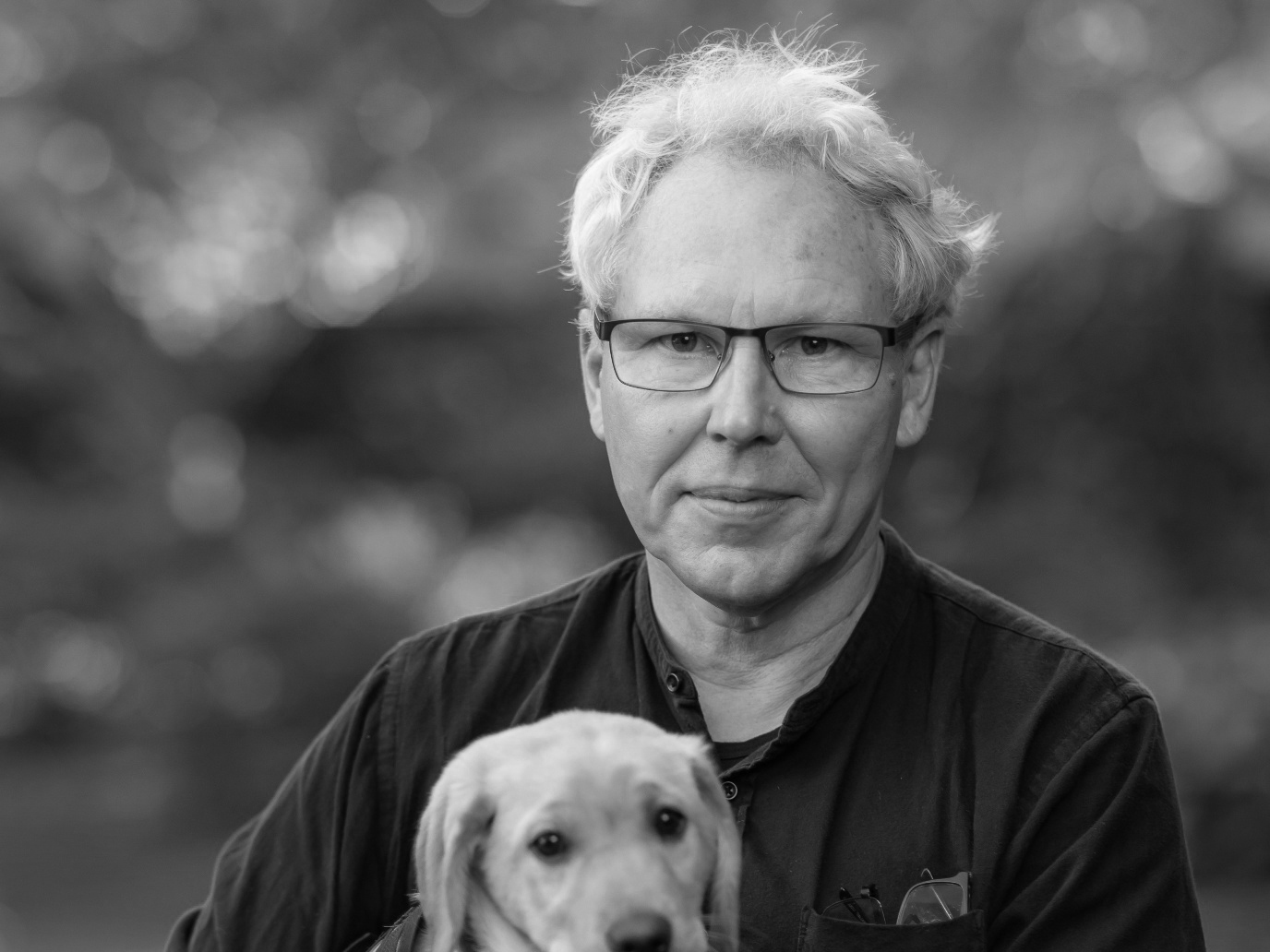
Anthony Collins
Anthony Collins is an interdisciplinary social analyst whose work explores violence and social justice. They were previously Associate Professor at Rhodes and Professor at DUT, and are currently based in the Dept La Trobe University, Australia. They are currently worrying about how systems of violence are reproduced across history and society, how certain ideas of violence can be used to undermine human rights, and about the kinds of harm that remain hidden and unrecognised in current discussions.
Abstracts
The sacrifice of Renee Good
“The Party told you to reject the evidence of your eyes and ears. It was their final, most essential command.” George Orwell, 1984
The extrajudicial public execution of Rene Good by United States Customs and Immigration Enforcement agent Jonathan Ross on 7th January 2026 presents a dense node of meaning. Alternately constructed as wholesome soccer mom, woke lesbian, and domestic terrorist, in her death she reveals the political fault lines of the USA’s transition into 21st century fascism. The killing of Good captures the changing meanings of nationality, whiteness, femininity, civic responsibility, and political freedom. She disrupts the assumption that a middle-class white woman and United States citizen would not be victim of state agents assigned to the ethnic cleansing of undocumented people of colour, and collapses assumptions about constitutionally protected non-violent political action. In constructing her as responsible for her own death, state agents and right-wing political commentators reveal their understandings of loyalty and obedience to the current regime, while the killer’s contemptuous words to her dying body – ‘fucking bitch’– invokes the patriarchal rage and victim blaming endemic to domestic violence. Here the common structure of political fascism and domestic coercive control become clear. Both wage war on independence, autonomy and humanity, both construct insubordination, disloyalty, and defiance as capital offenses. Both rely on ideological reframing and gaslighting that require victims and witnesses to disbelieve their own experience and give themselves over to counterfactual version of reality in order to survive. This common structure of psychological and physical, intimate and state, violence is the focus of this analysis.
Five genocides: lies, damned lies, and ideology
Genocides, like other acts of violence, are often contested. In the simplest version, this can be a ‘yes you did’, ‘no I didn’t’ dispute about the occurrence of specific historical events. These could potentially be settled by having a clear definition in law, the capacity for forensic investigation, and court with jurisdiction. But if you have followed the online arguments around Gaza, or claims of ‘white genocide’ in South Africa, it’s clear that this is something stranger going on. It’s not just that one side is deliberately lying and the other is telling the truth, it’s the feeling that entire groups of people have abandoned consensual reality and seem to genuinely believe a version of the world that is in glaring opposition to the evidence.
To understand this, we need to move beyond two epistemological traditions: positivism and humanism. Beyond positivism as the optimistic assumption that we can access pure objective facts about the world, and humanism in the sense of assuming that people are rational agents who develop an understanding of world based on these objective facts. Against these, we need to articulate a social constructionism of genocides, showing how groups of people come to experience reality based on systems of meaning that they may not chose, do not understand, and are not even be aware of. The task thus becomes to show how the contradictory accounts of genocide are assembled by other processes including embedded cultural narratives, deliberately constructed ideologies, and effects of new technologies like the algorithmic sorting of digital media. Here we trace those processes though the historical arc from erasing the genocidal nature of colonialism, through Holocaust denialism, competing accounts of Gaza, emerging claims of white genocide, and the organised denial of the species-terminating climate catastrophe.
Trauma-informed teaching and transformative discomfort: from elite victims to social justice
Many of us teach topics and materials that are potentially distressing for students, or ourselves. A risk-averse approaches advises against engaging with these issues, but this prevents students developing important expertise. An informed-consent approach stresses content notifications and options to allow students to avoid overly distressing materials, but this may also lead to missed opportunities to engage with challenges in a positive developmental way. A corporate risk management approach may enforce these approaches in a simplistic way and add an even more problematic hierarchy of safety, where some students’ well-being is elevated at the cost of others.
In response to these problems, this talk develops the concept of transformative discomfort, building on Zembylas’ pedagogy of discomfort, and integrating insights from trauma work on windows of tolerance. This shows how within supportive environments, experiencing manageable distress can potentially be a positive experience that facilitates deep critical reflection and intellectual development. It outlines pedagogical skills for maintaining safe windows of tolerance, using supportive strategies that enhance students’ abilities to manage challenging ideas while developing skills to manage distressing issues in their lives and professional work. This approach offers a framework for understanding distress in learning environments, strategies for supporting student development, and a critique of the harms of unreflective corporate risk management and the political privileging of the well-being of some groups over others.